

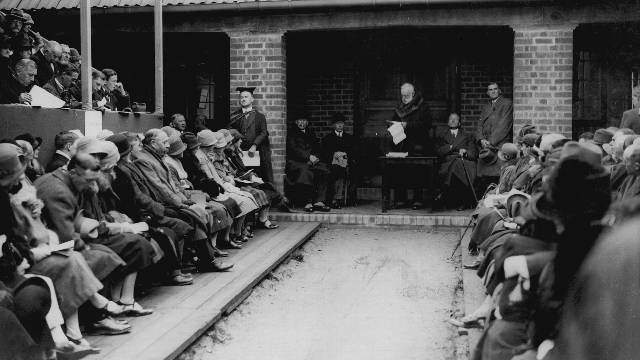
 The National Institute of Poultry Husbandry at 100 - rediscovering an eye witness account
To mark the Centenary of the opening of National Institute of Poultry Husbandry at Harper Adams, we’re sharing a contemporary acc …
Posted 3 November
Students from a range of Harper Adams courses were given the chance to see real-world forestry in action with a visit to England’s largest new permissive path, the Bradford Walk.
The walk was created by landed estates business Bradford Estates – read more about the visit here – and in this guest blog, BSc (Hons) Wildlife Conservation and Ecology student Rob Parish shares his reflections on the visit.

We visited Bradford Estates as part of my Woodland Management module.
I saw first-hand how the team there are engaging in an ambitious woodland creation project that aims to boost natural capital.
The team explained that biodiversity, alongside amenity for local people, is of special importance to the landowner - and as such, significant effort has been made to make major improvements to the site.
Miles of permissive footpaths have been put in place for the benefit of dog walkers as well as helpful signposting; local infrastructure improvements precede what the team hope will be an increase in interest once the new plantations begin to mature.
What made the biggest impression on me is the commitment to experimental tubing, provided by Agrovista, which is entirely plastic free in line with the owner’s vision. Despite the higher cost per unit than industry standard tubing, the choice was made to go with biodegradable tubing as Bradford Estates places significant value in the implementation of sustainable technology.

Walking along the new permissive footpaths, observing the patchwork of young saplings hidden away in deer tubes, I could picture the future woodland that the team have designed to be a local landmark.
Having been shown around several stands on site it was made clear to me that even small changes in landscape can cause very different issues for foresters.
In response to climate pressures, the makeup of the stands included a mix of broadleaf and conifer species especially selected for their resilience. Global warming is the largest existential threat for forestry: Bradford Estates is ensuring they’re prepared.
The last stand I was shown during my visit was a decades old plantation mostly dominated by oak, Quercus robur. Immediately the substantial spacing between individual trees was apparent – very uncharacteristic of oak plantations I’ve seen elsewhere.
It was explained that there had been large clear-felling of ash Fraxinus excelsior, historically grown alongside oak, due to Ash Dieback infection. I am reminded that not all of threats facing forestry lie in the future - but are here today.
My biggest takeaway from my time with the team is that the long-term stability of sustainable forestry depends on the initiative of smart foresters like those at Bradford Estates.
Related Posts
The National Institute of Poultry Husbandry at 100 - rediscovering an eye witness account
To mark the Centenary of the opening of National Institute of Poultry Husbandry at Harper Adams, we’re sharing a contemporary acc …
Posted 3 November
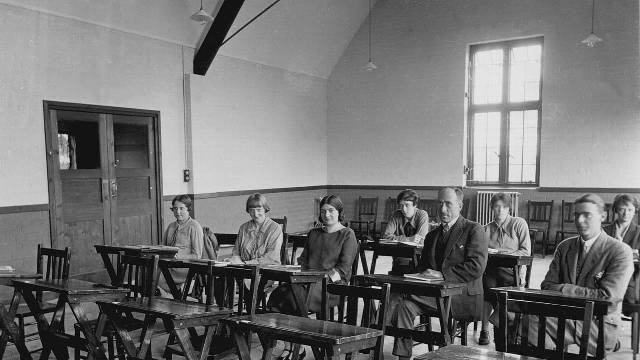 'More than 100 years of expertise' - a brief history of poultry at Harper Adams
Dr Stephen Mansbridge is Reader in Animal Science and Bioinformatics at Harper Adams University as well as Director of the Animal Science Re …
Posted 3 November
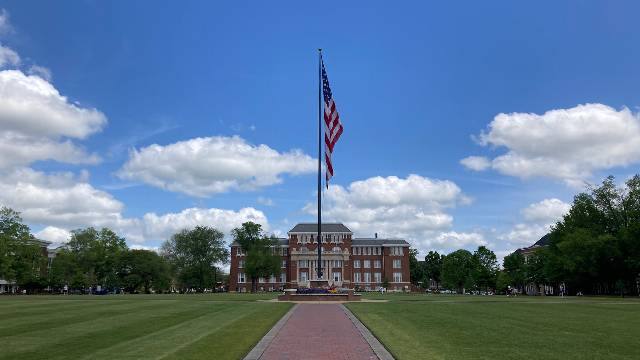 Agricultural Autonomy Institute joins Harper Adams University's 125th anniversary celebrations
A leading American expert in agricultural autonomy has paid tribute to Harper Adams University as it marks its 125th anniversary.Dr Alex Tho …
Posted 22 October
 Sky's the limit: Helen joins MP's fundraising parachute jump
A charity skydive by a Harper Adams University Business Development Consultant has helped raise more than £16,000 for a new cancer cen …
Posted 21 October